Thursday, May 5, 2016

Learn how to paint your water rockets and get professional looking results!

This week's video demonstrates a Water Rocket painting technique we have developed and tested for some time, and it has proven to give excellent results. This technique is very simple, and produces a finish that is as smooth and glossy as glass, without any buffing or polishing at all. Best of all, it's incredibly easy for anyone to get these results.
 
Not only does this method produce a great finish, it also is much more durable and will not scratch off from repeated use, nor will it peel away if you apply tape to the rocket. It is so tough, that you can paint the entire rocket, including the pressurized parts, and not even the pressure will affect it!
 
Check out the new video, and leave us a comment to let us know what you think!
 
 
Stay tuned for more exciting videos by subscribing to our channel. We have wrapped some really fascinating projects up, and will be publishing the results very soon!

Wednesday, April 27, 2016

Ultimate Tornado Tube for Water Rockets

Introducing the U.S. Water Rockets Ultimate Tornado Tube! This free downloadable 3D Printer object is our take on the classic "Tornado Tube", used for joining soft drink bottles together to create massively huge water rockets.


The "tornado tube" name comes from a science toy which is used to connect two bottles together to demonstrate a vortex when water moves from one bottle to another. Water rocket builders quickly seized upon this science toy and repurposed it as a water rocket bottle coupler.
 
However, the science toy version of the Tornado Tube is notorious for leaking air or water when under pressure, and it is also known for choking the flow inside the rocket, due to the small opening between the bottles that is formed by the seats for the flat washer seals.
 
Our design uses an external o-ring seal on each end, which we invented when designing our Gardena water rocket nozzle. Our seal design creates an unrestricted flow between bottles for optimum performance.
 
When you combine this design with our technique for splicing multiple bottles together, you can create gigantic water rockets that fly to incredible heights.
 
You can download the files for this design (and our other designs) from our Thingiverse page. http://www.thingiverse.com/thing:1522968
 

Saturday, October 10, 2015

How to make High Pressure Water Rockets Part 2

Long ago we decided that if we could hold the Water Rocket World Record for 10 years, that we would publish the details of how we made our High Pressure Water Rockets, to help get more people interested in competing. Little did we know at the time we passed the 10 year mark that there was a group in Capetown, South Africa who were already secretly designing a rocket similar in design to ours.
 
U.S. Water Rockets X-14 High Pressure Water Rocket
 
Our very first World Record was 1,421 feet (433 meters), set on September 2, 2004. For qualification, we had to average two flights in a 2 hour time period. Those flights were 1,382 feet and 1,450 feet high. The average of the two flights was the 1,421 foot world record, surpassing the former World Record held by Anti Gravity Research of 1,242 feet. In the following few years, we incrementally raised the record multiple times, culminating in a record of 2,044 feet. 
 
By September of 2014, no other team had surpassed our 1,421 record from 2004, so we began work on a series of videos explaining how we build these rockets. The videos are available on our YouTube Channel along with many of our other experiments and tutorials. Additional information can also be found on our website at www.USWaterRockets.com if you are interested in learning more. If you'd like to compete against the new record holder, Ascention III, then visit www.WRA2.org to see what it takes to qualify your rocket!
 
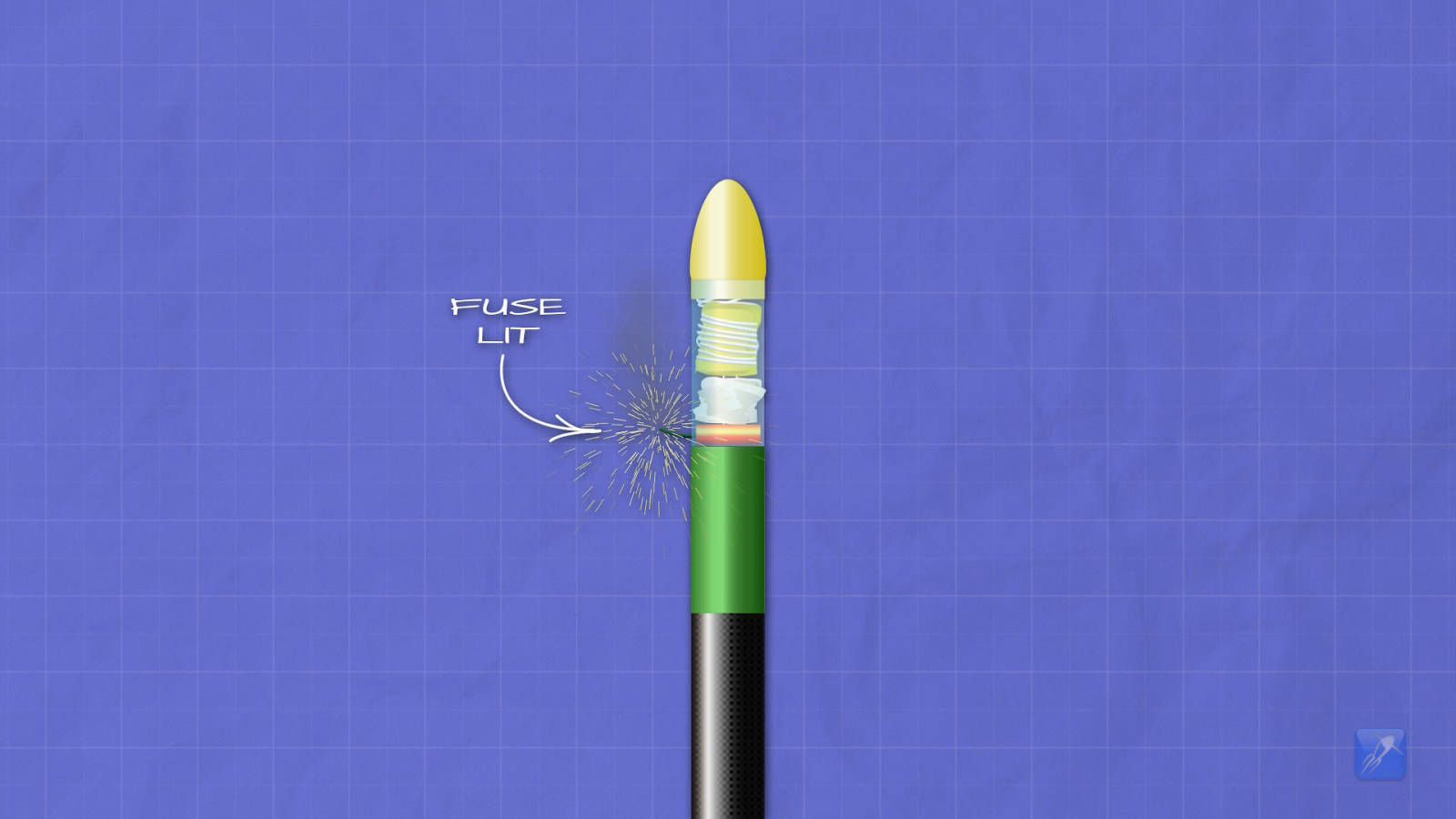
Part 2 of the video series explains multiple methods we created to eject the parachute from our rockets. These designs date back over 12 years, and our early work seems primitive by modern standards, yet it was enough to hold the record for an astounding 11 years!
 
Various Parachute Ejection Systems are Explained in Part 2 of our Video Series
 
Check out the video here:


Part 1 of the video series discusses the most difficult part of the High Pressure Water Rocket, the Pressure Vessel. The video explains several methods for making this component and includes detailed animations and live action video of actual rocket builds, explaining the processes. Check out the video, and let us know what you think!


Important: High Pressure Water Rockets can be very dangerous. They can explode and cause great harm, or they could impact something and cause injury or property damage. Always follow the appropriate safety precautions when working with these kinds of rockets. Be safe!